
As warehouses and distribution centers expand their automation capabilities, Automated Guided Vehicles (AGVs) have become one of the most reliable, scalable, and cost-effective solutions for improving intralogistics performance. From inbound handling to storage transport to outbound staging, AGVs help ensure cargo moves with consistency, accuracy, and minimal manual intervention. Yet with many AGV types available—tugger, pallet, fork, custom carriers—selecting the right model can be challenging. The wrong choice can create new bottlenecks instead of removing them. The right one can significantly increase throughput, reduce operational costs, and strengthen the overall flow of goods.
This guide provides a clear, practical framework to help you choose the most suitable AGV for your intralogistics needs—based on real operational data, not assumptions.
Why Choosing the Right AGV Matters
Not all AGVs are designed to solve the same problems. Each model has specific strengths, limitations, and ideal use cases. Choosing correctly allows businesses to:
-
Automate cargo flow across inbound, storage, and outbound operations
-
Reduce non-value-added travel and manual handling
-
Enhance workforce productivity and safety
-
Ensure predictable, 24/7 operational performance
-
Scale automation progressively and cost-effectively
When AGVs are matched precisely to workflow requirements, the result is a smoother, safer, and more efficient intralogistics environment—exactly what modern supply chains demand.
Step 1: Identify Your Primary Movement Type
Start by mapping how goods currently move inside your facility. In most warehouses and distribution centers, material flow falls into three main categories:
1. Tugging (long-distance, repetitive routes)
Ideal when transporting multiple loads in a single trip or moving goods between distant zones such as:
-
Receiving → Put-away
-
Production line → Warehouse
-
Warehouse → Shipping
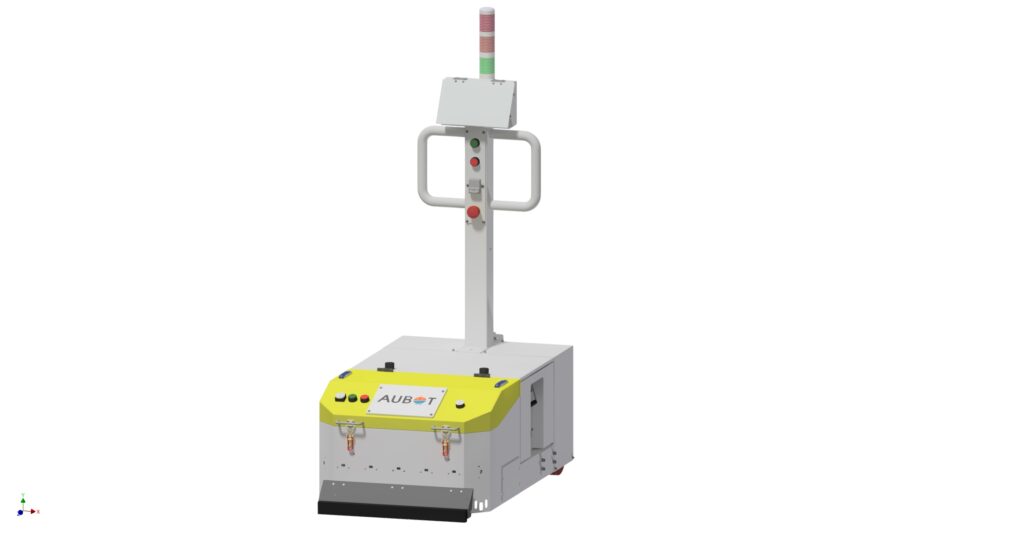
Recommended AGV: Tugger AGV (e.g., T500)
2. Pallet Transport (point-to-point movement)
Used for frequent, predictable pallet transfers, often replacing forklifts.
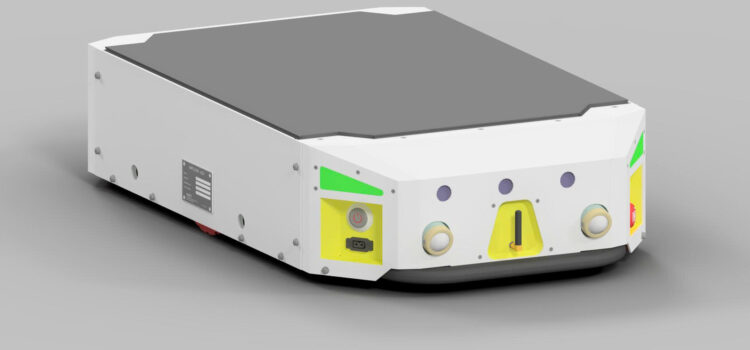
Recommended AGV: Pallet AGV (e.g., F300)

3. Storage & AS/RS Integration
For facilities with high-density storage systems or shuttle-based operations.
Recommended AGV: Specialized pallet carriers or system-integrated AGVs
Once you’ve identified your primary movement type, selecting a suitable AGV category becomes much easier.
Step 2: Define Load Requirements Accurately
The AGV must be matched to your actual load—not your estimated load. Consider:
-
Weight capacity (e.g., 300 kg, 500 kg, 1000+ kg)
-
Load dimensions
-
Center of gravity
-
Handling method (towing, lifting, carrying, docking)
An AGV that is under-capacity will cause performance issues. One that is over-capacity may lead to higher-than-needed investment costs. Precision matters.
Step 3: Map Your Environment and Constraints
Your facility layout strongly influences AGV selection. Key factors include:
Aisle width
Narrow aisles require compact vehicles with precise navigation.
Floor conditions
Uneven surfaces may affect stability or speed.
Traffic density
High-traffic zones require advanced safety sensors and smart fleet coordination.
Interfaces with docks, conveyors, or AS/RS
AGVs must connect seamlessly to upstream and downstream processes.
A thorough environmental assessment helps identify the AGV model and navigation method that best fits your actual operating space.
Step 4: Determine the Navigation Technology You Need
AGVs today use different navigation systems, each suitable for specific conditions:
-
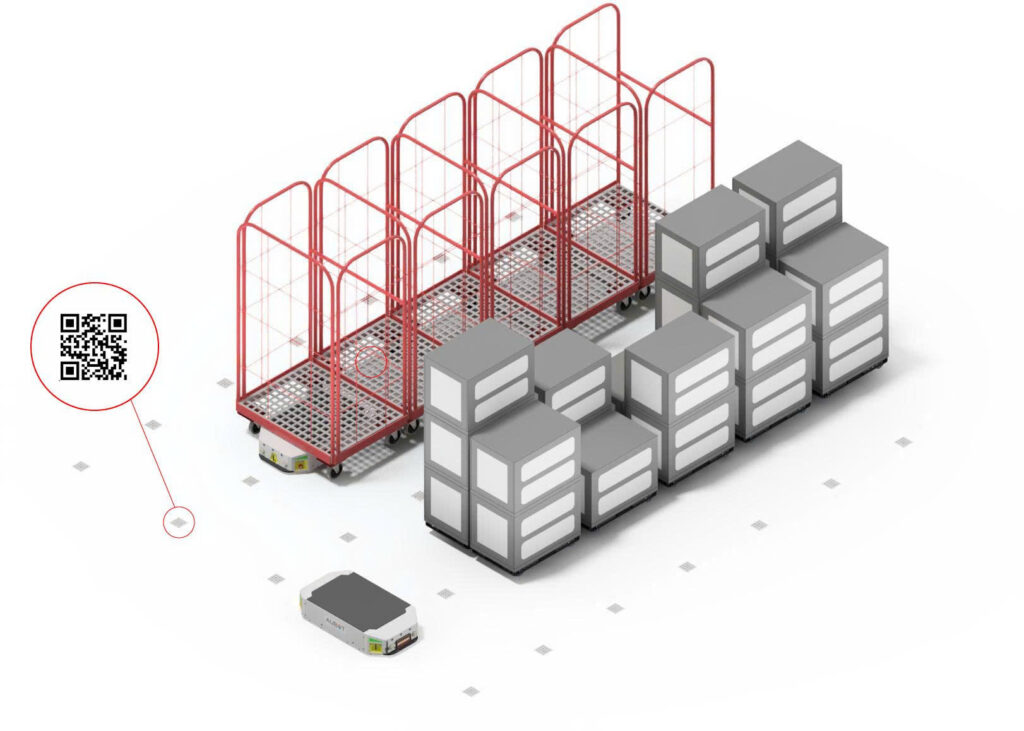
Natural feature navigation: Flexible, ideal for dynamic environments
-
QR/SLAM hybrid: High accuracy for structured warehouses
-
Magnetic tape or markers: Best for simple, fixed routes
Choosing the right navigation method ensures stability and scalability as the warehouse evolves.
Step 5: Consider Your Throughput and Cycle Time Targets
AGVs must keep up with your operational demand. Define:
-
Trips per hour
-
Peak-time requirements
-
Fleet size needed for target throughput
-
Buffering or staging needs
A clear performance expectation helps determine fleet size, charging strategy, and whether you need:
-
24/7 availability
-
Opportunity charging
-
Multi-load towing
-
Multiple vehicles for redundancy
Step 6: Evaluate Software Integration and Fleet Management
AGVs deliver the highest value when integrated into a unified orchestration platform. Look for:
-
WMS/WCS integration
-
Real-time traffic control
-
Route optimization
-
Task scheduling and prioritization
-
Energy and charging management
Good software is the backbone of efficient cargo flow automation. It ensures your AGVs work as a coordinated fleet—not as isolated units.
Step 7: Choose a Reliable, Scalable Partner
AGV deployment is not only about hardware. You need a partner capable of:
-
Understanding your operational challenges
-
Designing scalable automation roadmaps
-
Providing reliable local support
-
Ensuring long-term stability and maintenance
A proven partner accelerates ROI and reduces operational risk.
Aubot’s Practical Approach to AGV Selection
At Aubot, we follow a clear, data-driven methodology:
-
Analyze cargo flow to identify high-impact automation points
-
Map operational constraints to match AGVs with real-world conditions
-
Select the most practical solution instead of the most complex
-
Implement step-by-step for minimal disruption
-
Ensure long-term reliability through strong service and support
Our portfolio—including tugging, pallet, and customized AGVs—is engineered to meet the core goal of modern intralogistics: automate the way cargo flows.
Choosing the right AGV is not about following trends—it’s about aligning technology with your operational reality. By focusing on movement types, load requirements, layout constraints, throughput needs, and software integration, you can build an automation system that enhances performance from day one and scales with your business.