In today’s high-pressure supply chains, every minute lost in inbound or outbound handling creates ripple effects across the entire warehouse. Delays at receiving slow down put-away. Congestion at outbound staging affects picking performance. Misaligned timing between these two flows results in idle labor, wasted motion, and rising operational costs.
This is why automated inbound–outbound handling has become a cornerstone of modern intralogistics. By automating how goods enter, move through, and leave a facility, businesses can eliminate bottlenecks, increase throughput, and create a more predictable and resilient flow of cargo.
The Growing Challenge of Manual Inbound–Outbound Operations
Even the most experienced warehouse teams struggle to maintain efficiency when relying solely on manual processes. Several recurring bottlenecks slow down end-to-end material flow:
-
Unpredictable truck arrival schedules
-
High labor dependency at receiving and staging
-
Forklift congestion in peak hours
-
Long-distance, repetitive material transfers
-
Misaligned timing between receiving, put-away, picking, and shipping
-
Limited visibility into movement status
In many facilities, 40–60% of total operational delays occur at these two critical entry/exit points of the warehouse. And when inbound stalls, the entire storage system slows down. When outbound stalls, orders miss their cut-off times.
Automation directly addresses these structural inefficiencies.
How Automated Inbound–Outbound Handling Works
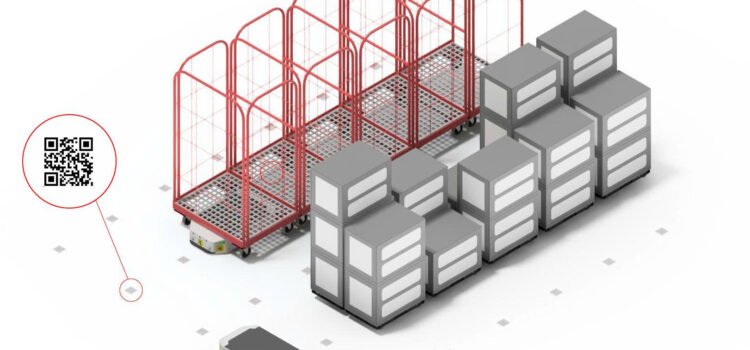
Automated solutions replace repetitive, manual transport with intelligent, coordinated movement. Systems such as tugger AGVs, pallet carriers like the F300, and integrated software platforms streamline how goods transition from one process to the next.
An automated inbound–outbound flow typically includes:
1. Automated Receiving
-
Goods are unloaded from trucks and transferred onto AGVs
-
Dimensions and labels are scanned automatically
-
Tasks are instantly assigned to the right destination
2. Automated Put-Away
-
AGVs move loads directly to storage zones or AS/RS entry points
-
Software ensures optimal routing
-
No human intervention required for long-distance travel
3. Order Staging and Consolidation
-
When orders are ready, AGVs retrieve pallets from storage
-
Loads are moved to outbound lanes based on priority, truck schedules, and shipment cut-offs
4. Dock-to-Dock Synchronization
-
Receiving and shipping flows are aligned
-
The system directs AGVs to balance load between inbound and outbound demand
-
Visual dashboards track progress in real time
The result is a continuous, uninterrupted cargo flow from receiving to shipping.
Faster, Safer, More Predictable Cargo Flow
1. Significant Throughput Increase
Automated vehicles move continuously, follow optimized routes, and eliminate idle time. This increases the number of pallets and carts that flow through receiving and shipping every hour.
2. Reduced Congestion Across the Warehouse
By replacing forklifts with compact AGVs, facilities minimize traffic conflicts—one of the primary causes of operational delays.
3. End-to-End Visibility
A centralized platform monitors every task in real time:
-
Which trucks have been unloaded
-
Which pallets are moving
-
What has been staged for outbound
This clarity prevents miscommunication and avoids unnecessary waiting.
4. Consistent, 24/7 Flow
AGVs maintain the same speed and precision at all times. This creates a predictable rhythm for warehouse teams and stabilizes downstream processes such as picking and packing.
5. Lower Operating Costs
Automation cuts labor-intensive travel, reduces forklift wear and tear, and optimizes energy usage. Over time, facilities achieve lower cost per pallet moved.
6. Improved Safety and Compliance
By removing forklifts from congested zones, companies dramatically reduce collision risks and improve overall workplace safety.
The Role of AGVs in Eliminating Bottlenecks
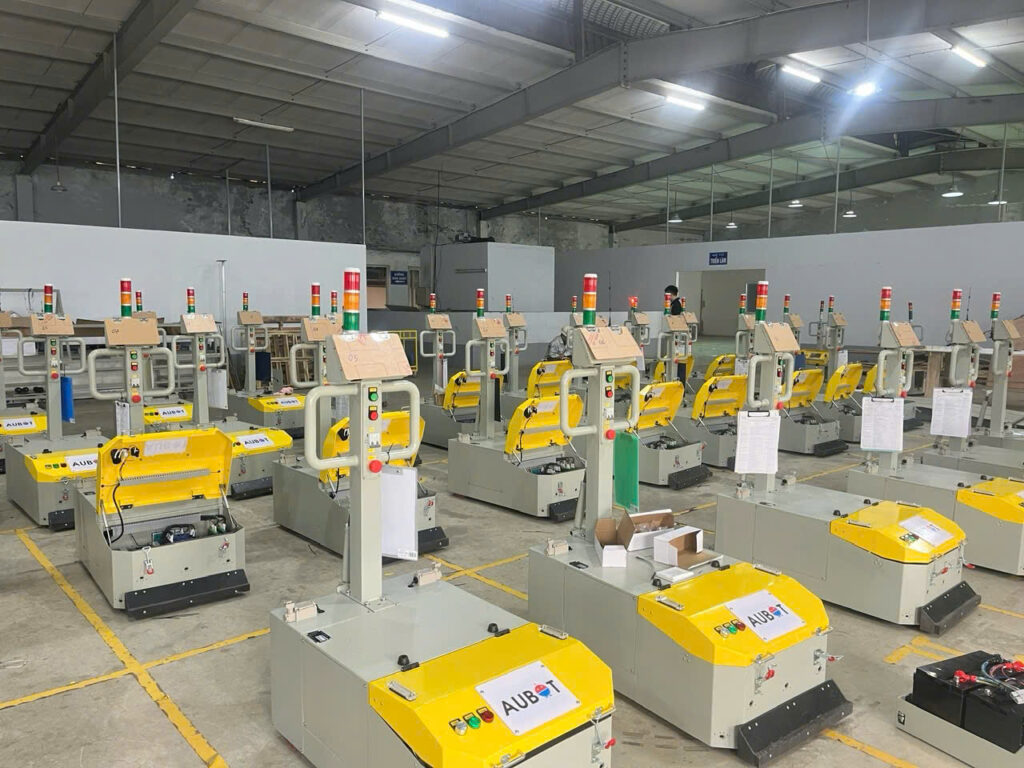
AGVs are the backbone of automated inbound–outbound workflows. Each type solves a different part of the flow.
Tugger AGVs (e.g., T500)
Best for moving multiple loads per trip, ideal for long-distance routes or high-volume receiving/shipping areas.
Pallet AGVs (e.g., F300)
Perfect for point-to-point transfers with high accuracy, especially when pallets require stable, consistent movement.
Integration with AS/RS and conveyors
AGVs connect the receiving dock, storage system, and outbound lanes into one synchronized process.
Together, these systems transform the warehouse from a series of disconnected tasks into a unified cargo flow.
Why Inbound–Outbound Automation Drives the Highest ROI
In warehouse automation, inbound–outbound operations typically deliver the fastest improvement in performance because they:
-
Handle the highest volume of repetitive movement
-
Involve long travel distances
-
Affect every downstream process
When the entry and exit points of the warehouse operate smoothly, the entire facility becomes more efficient.
In other words: Fixing inbound–outbound bottlenecks improves the whole cargo flow—not just one part of it.
Aubot’s Approach to Automated Inbound–Outbound Handling
At Aubot, we design inbound–outbound automation with a clear mission: optimize the way cargo flows.
Our solutions combine:
-
AGV technologies such as the F300 and T500
-
Modular software platforms for scheduling, routing, and real-time visibility
-
Flexible integration with WMS, conveyors, and AS/RS
-
Practical engineering that adapts to existing layouts
-
Reliable support for long-term operation
This ensures customers achieve consistent throughput, lower operational risk, and scalable automation for future growth.
A Smarter, Faster, More Efficient Warehouse Starts at the Edges
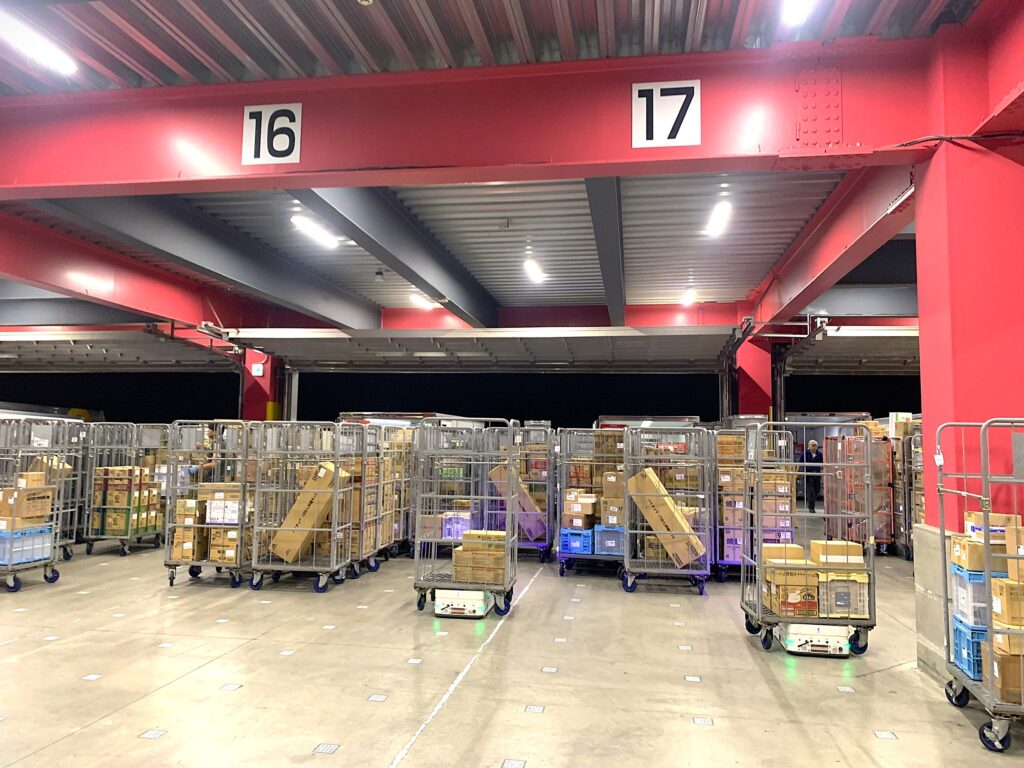
Optimizing inbound–outbound flow is one of the most impactful ways to improve warehouse performance. Automation eliminates bottlenecks, reduces manual labor, and ensures cargo moves smoothly from truck to rack to truck again. As supply chains demand more speed, accuracy, and resilience, automated inbound–outbound handling is no longer optional—it is essential for the next generation of warehouse operations.
Great post, you have pointed out some excellent points, I too conceive this is a very good website.
Can you be more specific about the content of your article? After reading it, I still have some doubts. Hope you can help me.
Please reach us at: sales@aubot.vn for more information. We are ready to help!
Your article helped me a lot, is there any more related content? Thanks! https://www.binance.info/ph/register?ref=IU36GZC4