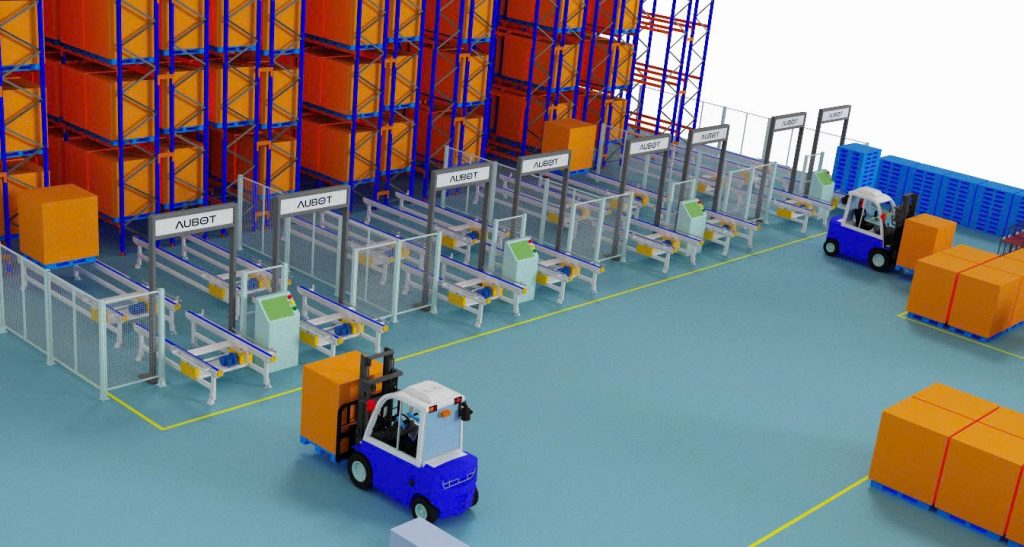

AUBOT’s software platform acts as an intelligent operating system that seamlessly connects automation equipment and optimizes overall operational management processes for businesses.
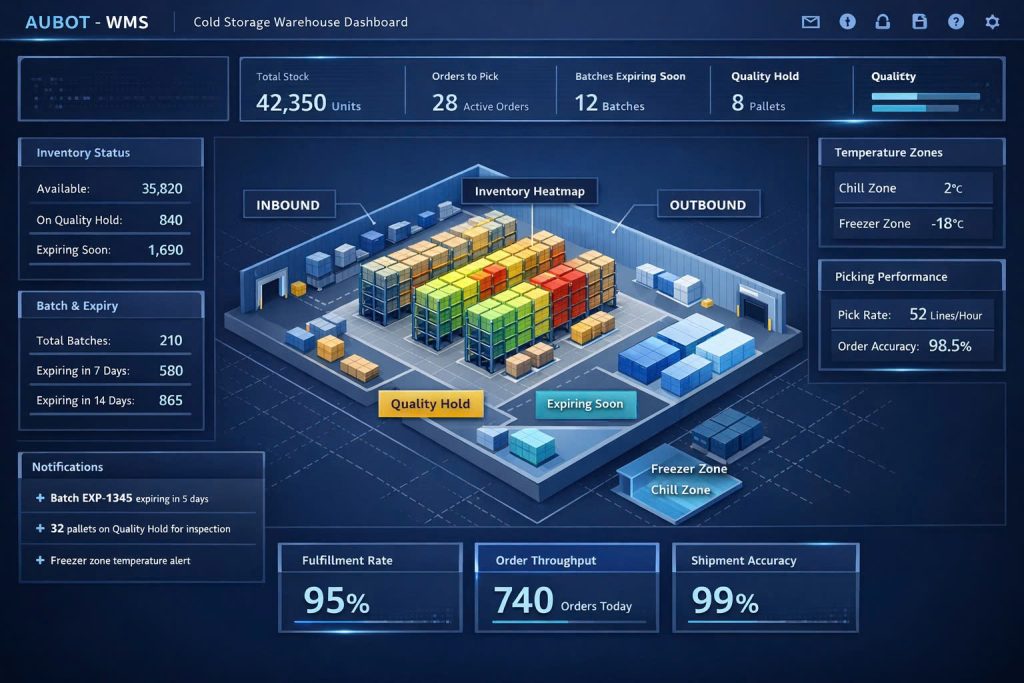
Manages warehouse operations by determining where goods are stored, when they are dispatched, order priorities, storage allocation rules, inventory logic, and overall warehouse workflows.
Inventory &
Location Management
Manage SKU details, batch numbers, and expiration dates; automatically recommend optimal storage locations based on product characteristics, rack capacity, and inventory turnover frequency.
Smart Inbound
& Outbound Operations
Digitize the entire workflow from receiving to shipping; apply FIFO/FEFO rules and barcode scanning to reduce errors and improve order processing speed.
Real-Time
WCS Integration
Directly connect with the WCS to control automation equipment; instantly update pallet status and respond to alerts through continuous smart sensor monitoring.
Automated
Task Coordination
Automatically prioritize inbound and outbound tasks while optimizing equipment movement routes to ensure KPI and SLA targets are achieved accurately.
Inventory Audit
& Traceability
Enable detailed traceability by Pallet ID and batch number; support accurate inventory audits and provide full visibility of warehouse transaction history and stock movement.
Dashboard &
Analytics Reports
Visual reporting tools help monitor operational productivity, inventory thresholds, and real operational data, supporting faster and more effective decision-making.
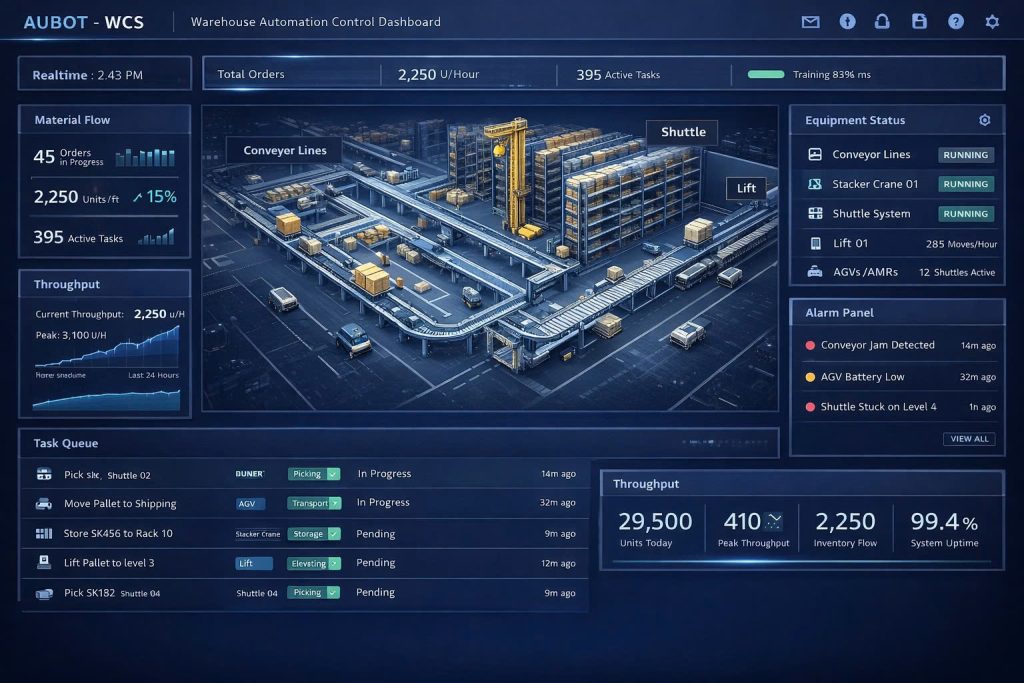
Real-time operational control layer positioned between the WMS and automation equipment, FMS, and PLC systems. It receives operational commands from the WMS, then converts them into detailed equipment tasks to coordinate the actual pallet flow inside the warehouse.
Real-Time Control:
Direct communication with PLC systems to control robots and automation equipment in real time, ensuring fast and accurate technical responses.
Task Coordination:
Receive commands from the WMS layer and convert them into detailed execution steps based on the operating characteristics of each device.
Smart Routing:
Automatically calculate optimal movement routes for goods while dynamically preventing traffic conflicts and congestion within the warehouse.
Machine Cycle Optimization:
Intelligent algorithms combine inbound and outbound tasks to minimize empty equipment movement and improve overall operational throughput.
Monitoring & Diagnostics:
Monitor equipment status 24/7, instantly detect and report errors, and provide tools for fast onsite exception handling.
Maintenance & Equipment Health:
Digitize equipment lifecycle data and monitor machine conditions to support predictive maintenance and reduce unexpected downtime risks.
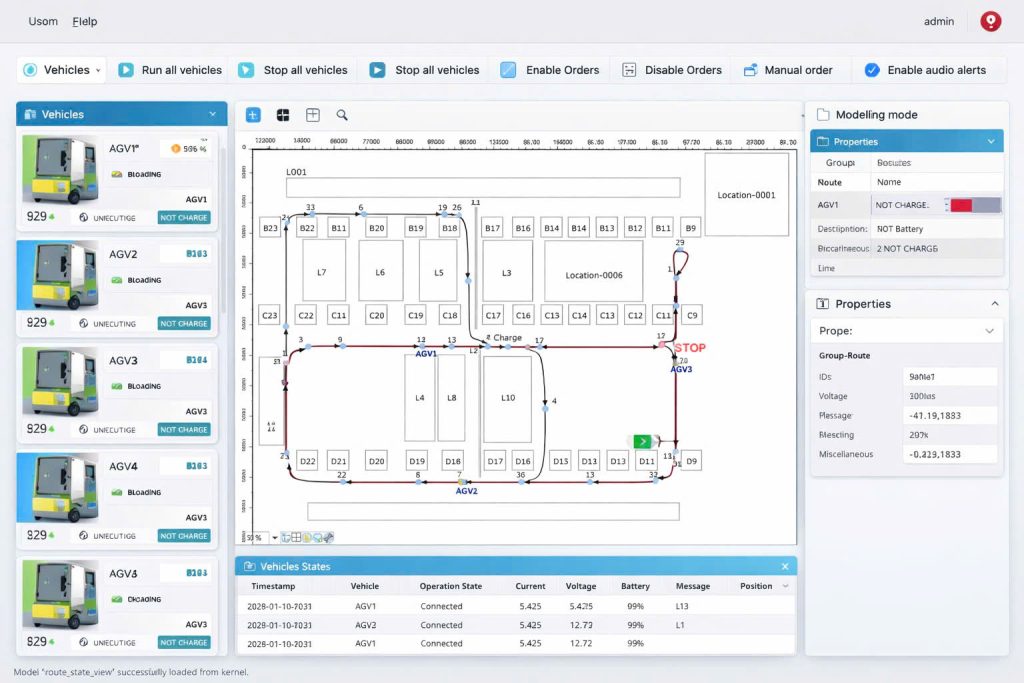
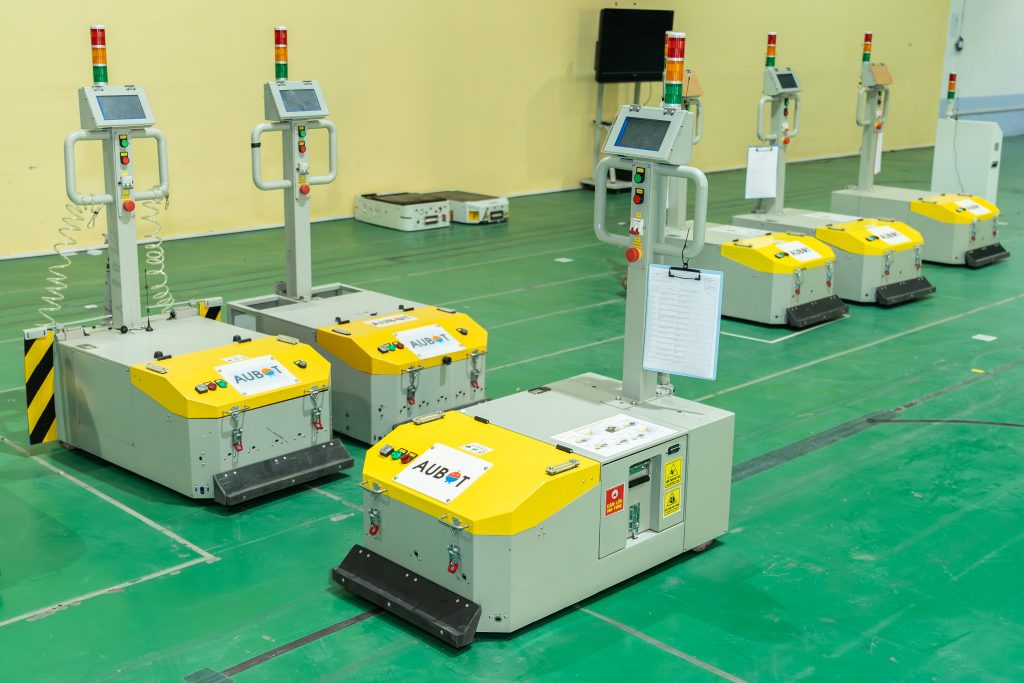
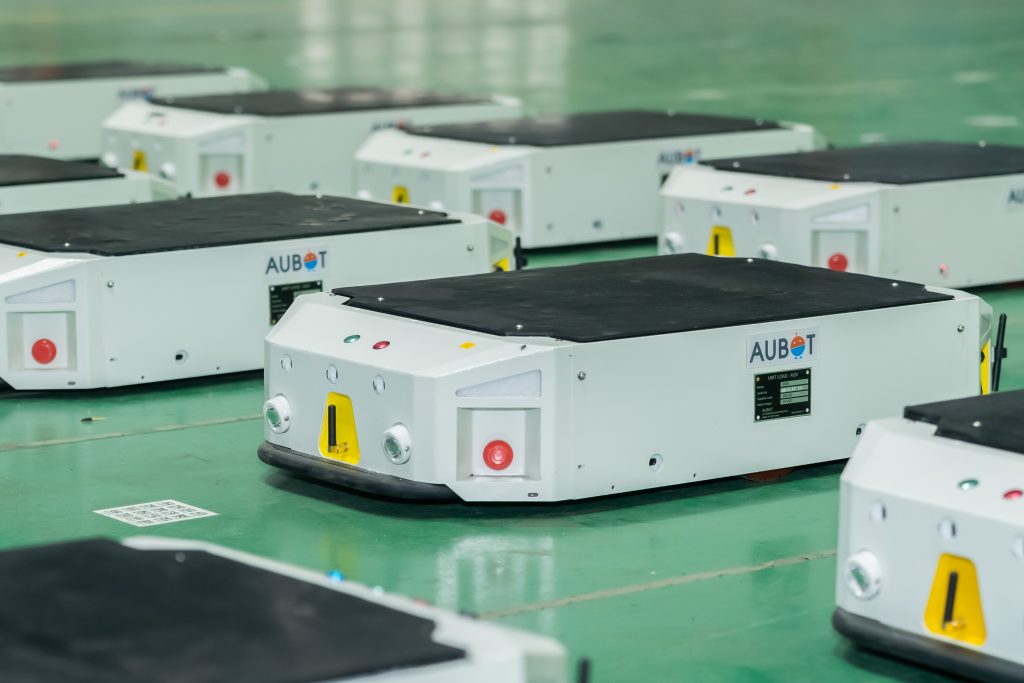
Designed to manage and coordinate Automated Guided Vehicles (AGVs), controlling all robot movement activities within warehouse operations.
Map & Route Management
Configure operational maps, traffic routes, intersections, and restricted areas for AGV movement.
Intelligent Task Coordination
Automatically assign tasks to each AGV based on location, operational status, and order priority.
Traffic Control:
Manage AGV traffic at intersections, prevent route conflicts, and dynamically optimize movement flow to avoid congestion.
Automatic Energy Management:
Monitor battery levels and automatically direct AGVs to charging stations when needed to ensure continuous operation.


Digitize your warehouse and boost operational productivity with AUBOT’s software ecosystem!

A leading provider of comprehensive automation ecosystems, combining high-performance autonomous robots with intelligent management platforms to optimize business operations.
 Tel: +84 378 829 081
 Email: sales@aubot.vn
Our solutions:
Our services:
Follow us: